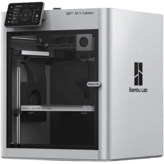
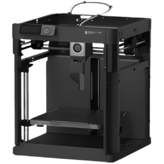
Bambu Lab A1 Reviews: See Why 0 Shoppers Rated It 0 Stars!
It’s not just hype. The Bambu Lab A1 3d printer earned its 0/5 from 0 real users. But what’s behind those stars?


 Recaptor
 Bambu A1: A Versatile FDM 3D Printer for Beginners and Intermediates
In the competitive world of consumer 3D printing, the Bambu Lab A1 has carved out a distinctive niche by combining high adaptability with user-friendly features. Designed primarily for beginners and intermediate users, this 3D printer promises to deliver precision and convenience at an accessible price point. Its expansive build volume and thoughtful integration of smart technology demonstrate that it is built to handle prototyping and other practical applications with impressive engineering data backing. The overall impression from its specs suggests a printer that is powerful yet approachable for those stepping into 3D printing or looking to scale without overspending.
Detailed Specs & Features
On paper, the Bambu Lab A1 combines essential features that translate into tangible benefits for everyday users. Its FDM/FFF printer type is widely appreciated for versatility and material compatibility. The machine is prebuilt but still requires some assembly, allowing users to get acquainted with its mechanics early on without starting from scratch. The build volume of 1024 cubic inches, derived from equal dimensions of 10.08 inches for width, depth, and height, promises substantial part sizes or multiple smaller models in a single session, which is great for prototyping.
This printer supports a wide variety of filaments, including PLA, PETG, TPU, and PVA, along with multi-material printing capabilities supporting up to four materials simultaneously. On top of that, the filament auto-loading and filament dry box features reduce user intervention and improve filament longevity, fundamental for quality output. Its single direct-drive extruder can reach a maximum temperature of 572°F, complementing the heated bed set at 176°F, ensuring compatibility with more demanding filaments and good print adhesion via its PEI-coated, magnetic build plate.
The printer's core hardware also shines with a 2.4-inch touchscreen display offering intuitive interaction, paired with a built-in camera for remote monitoring. This remote capability extends through Wi-Fi and USB connectivity, supported by proprietary cloud-based software that facilitates fleet management and remote firmware updates. These specs collectively reflect a machine designed to be both functional and connected, meeting evolving user demands.
User Experience & Performance (Based on Specs)
Design & Build
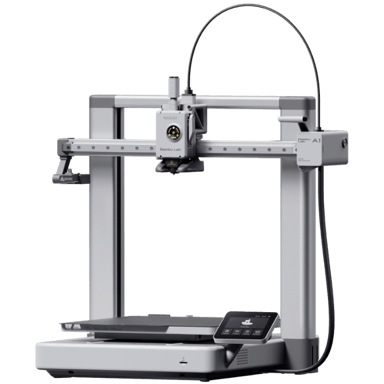
The Bambu A1 features a Cartesian frame with an open enclosure, suitable for users who prioritize accessibility over a fully enclosed printing environment. Weighing around 18 pounds, it balances portability and stability well. Thanks to a compact footprint of roughly 13.66 inches wide and 16.5 inches tall, it can comfortably fit on most workbenches without encroaching on workspace. The combination of direct-drive extrusion with quick-swap, replaceable nozzles ranging from 0.2mm to 0.8mm adds excellent user flexibility for various print resolutions and speeds.
Performance
Official specs indicate a max print speed of 500 mm/s, with a verified effective speed closer to 300 mm/s, which suggests that the printer balances speed with consistent quality. The automatic first-layer calibration and print recovery features address some of the common pain points in FDM printing, making the user experience smoother and less prone to waste. Measuring 48 dB for operating noise, this printer is quieter than many home models, improving comfort during longer print jobs. Safety is not overlooked either, with critical features like overheat protection and auto-shutdown on error offering peace of mind.
Connectivity & Software
Detailing the connectivity experience, the A1 supports USB, Wi-Fi, and cloud services, allowing remote monitoring and cloud fleet management; great for users managing multiple printers or those who want to keep tabs on progress from a distance. The exclusive Bambu Studio slicer supports several 3D model formats, including STL, OBJ, and G-code, making it compatible with a broad range of design workflows. Integration via API and SDK is also available, indicating that more advanced users can customize or extend functionality where needed. The mobile app and time-lapse recording are nice value-adds that make this printer feel both modern and user-attuned.
Extra Features
Some notable add-ons include filament runout and jam detection sensors, which reduce print failures caused by material issues. Vibration compensation technology further enhances print quality by stabilizing movement during operation. The machine supports tool-free maintenance and offers spare parts readily, while lubrication and nozzle replacement requirements remind users of basic upkeep to sustain long-term reliability. The inclusion of a filament dry box indicates a focus on material care, as humidity can significantly degrade print quality, especially with filaments like TPU or PVA.
Pros & Cons
Pros
- Large build volume suitable for varied prototyping needs
- Extensive filament compatibility with multi-material support
- Smart connectivity features, including remote monitoring and cloud control
- Quiet operation and robust safety certifications (FCC, CE)
Cons
- An open enclosure can expose prints to environmental factors
- Requires some assembly despite being marketed as prebuilt
- Relies on proprietary software, which might limit customization
Price & Value for Money
Priced at $299 at the BambuLab Store, the Bambu A1 presents itself as a compelling option within the entry to mid-tier 3D printer market. Given its 1-year warranty and broad power supply voltage range from 100 to 240 volts, the pricing feels justified for users wanting a serious step up from basic printers. The array of smart features, filament management, and multi-material capability adds tangible value, placing this machine as an excellent choice for hobbyists and educational environments without breaking the bank.
Quick Take
In short, the Bambu Lab A1 combines an accessible price with a solid set of specifications tailored for consumers aiming to tackle prototyping challenges at home or in small studios. If we look at the numbers alone, its effective print speed and reliable safety features give it an edge over many similarly priced printers. It's a well-rounded device that supports growth as users progress from beginner to intermediate projects.
Closing Recommendation
The Bambu A1 may be ideal for users seeking a straightforward, capable 3D printer that evolves with their skills through upgrade paths and wide filament compatibility. Its smart connectivity and print recovery systems help users achieve consistent results while reducing common printing frustrations. For those weighing versatile functionality and budget, this model helps balance the essentials with a future-proof approach.
Verdict
Rating: Based on the specifications and overall feature set, we believe Bambu Lab A1 deserves 4.3 out of 5.
- Winner Feature => impressive multi-material support paired with smart sensor-driven reliability.
- Needs Improvement => open enclosure limits environmental control, and reliance on proprietary software may restrict some users.
Reviews 0
The good, the bad, and the brutally honest.Average Rating


More 3D Printers 453
Unlock more awesome finds.